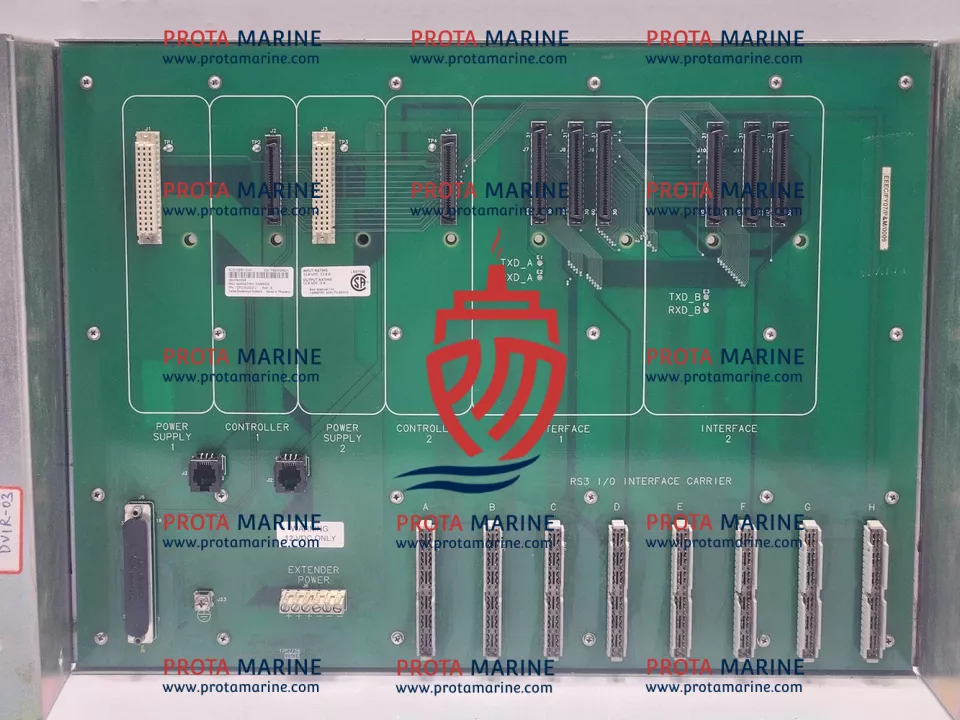
Description
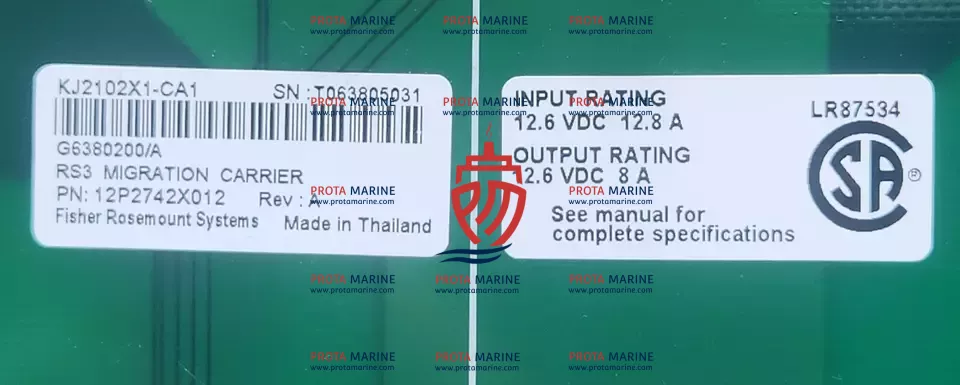
FISHER ROSEMOUNT SYSTEMS
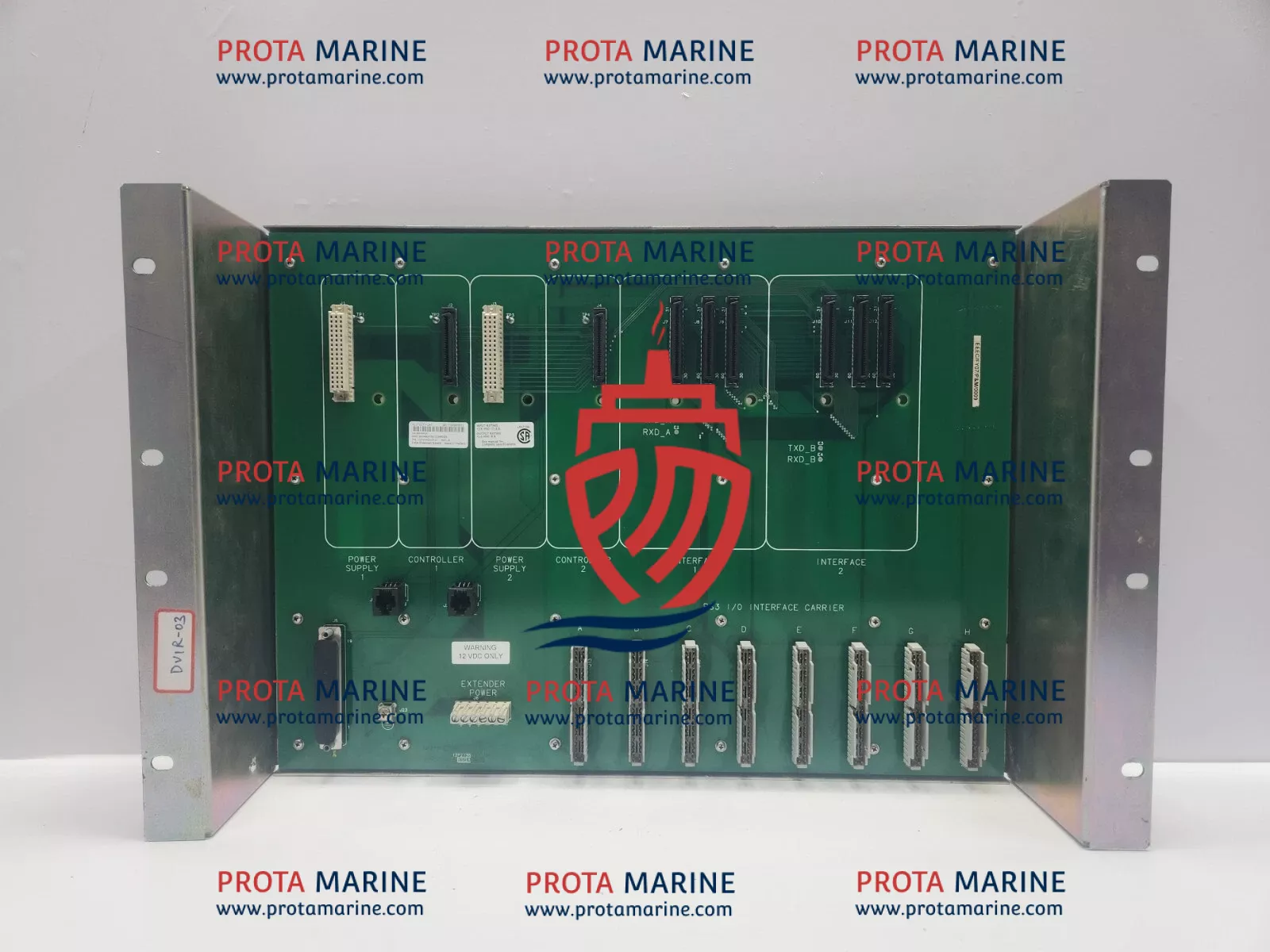
KJ2102X1-CA1
RS3 MIGRATION CARRIER
PN: 12P2742X012 REV: A
INPUT RATING: 12.6 VDC 12.8 A
OUTPUT RATING: 12.6 VDC 8 A
G6380200/A
12P2736
The Fisher Rosemount KJ2102X1-CA1 is an RS3 Migration Carrier designed to facilitate the transition and integration of legacy RS3 Distributed Control System (DCS) hardware within modern or hybrid marine control architectures. As a carrier module, it provides the mechanical and electrical interface necessary to house and power RS3 I/O or controller cards during migration projects, enabling continuity of control functionality without full system replacement. This component plays a critical role in marine control system upgrades aboard vessels where RS3-based automation infrastructure remains in service, ensuring operational continuity and reducing the risk and cost associated with full panel replacement.
Key Features
✓ Functions as a migration carrier for Fisher Rosemount RS3 DCS modules, providing a structured interface for legacy card retention during system transition or upgrade programmes.
✓ Rated at 12.6 VDC input at 12.8 A and 12.6 VDC output at 8 A, as stated on the nameplate — all other electrical or environmental specifications are subject to confirmation against original documentation.
✓ Compatible with the Fisher Rosemount RS3 DCS platform; suitability for specific controller versions, I/O card types, or expanded configurations should be confirmed against system drawings and revision documentation (Rev A noted).
✓ Intended for installation within control panels or automation cabinets in protected onboard environments; mounting location, enclosure requirements, and any applicable classification society considerations are subject to the vessel’s specific installation design.
✓ Serves as a key component in DCS migration and retrofit projects, reducing downtime by allowing legacy RS3 modules to remain operational within updated control infrastructure — direct replacement or like-for-like swap compatibility should be verified prior to installation.
Marine Applications
✓ Offshore production platforms and FPSOs utilising Fisher Rosemount RS3 DCS for process and safety control system management.
✓ Large commercial vessels including tankers, bulk carriers, and gas carriers where legacy DCS infrastructure supports cargo, ballast, or machinery automation.
✓ Naval and government vessels operating RS3-based integrated control and monitoring systems requiring phased migration rather than full replacement.
✓ Drillships and semi-submersible rigs employing RS3 DCS in drilling control, power management, and auxiliary system automation.
✓ Retrofit and lifecycle extension projects across any vessel class where RS3 DCS hardware remains active and migration to a newer Emerson DeltaV or equivalent platform is being planned or executed.
Why Marine Engineers Choose
Marine engineers and automation teams specify the Fisher Rosemount RS3 Migration Carrier when executing phased DCS upgrades, as it preserves existing I/O infrastructure, minimises downtime, and supports a controlled transition to modern control architecture without disrupting critical onboard systems.
Ideal For
Offshore platforms, FPSOs, tankers, gas carriers, drillships, and any commercial or industrial vessel operating Fisher Rosemount RS3 DCS infrastructure undergoing migration, retrofit, or lifecycle extension programmes.
Technical Support & Compliance
Technical support is available for remote troubleshooting, pre-installation compatibility review, onboard commissioning guidance, and integration support for RS3 migration projects. Assistance with retrofit scoping, card-level testing, and system configuration can be arranged depending on project requirements — all support scope is subject to confirmation. To confirm compatibility and ensure correct application, buyers are advised to share nameplate photographs, the full part number and revision, system architecture drawings, the RS3 controller version and I/O card types in use, vessel name, IMO number, and a clear description of the intended migration scope. All compatibility and suitability assessments are subject to confirmation against verified documentation.