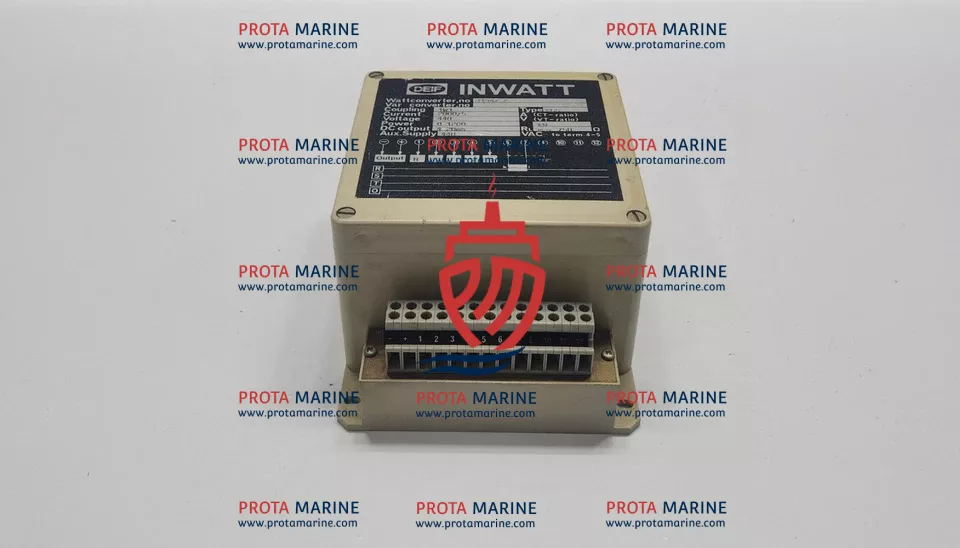

Description
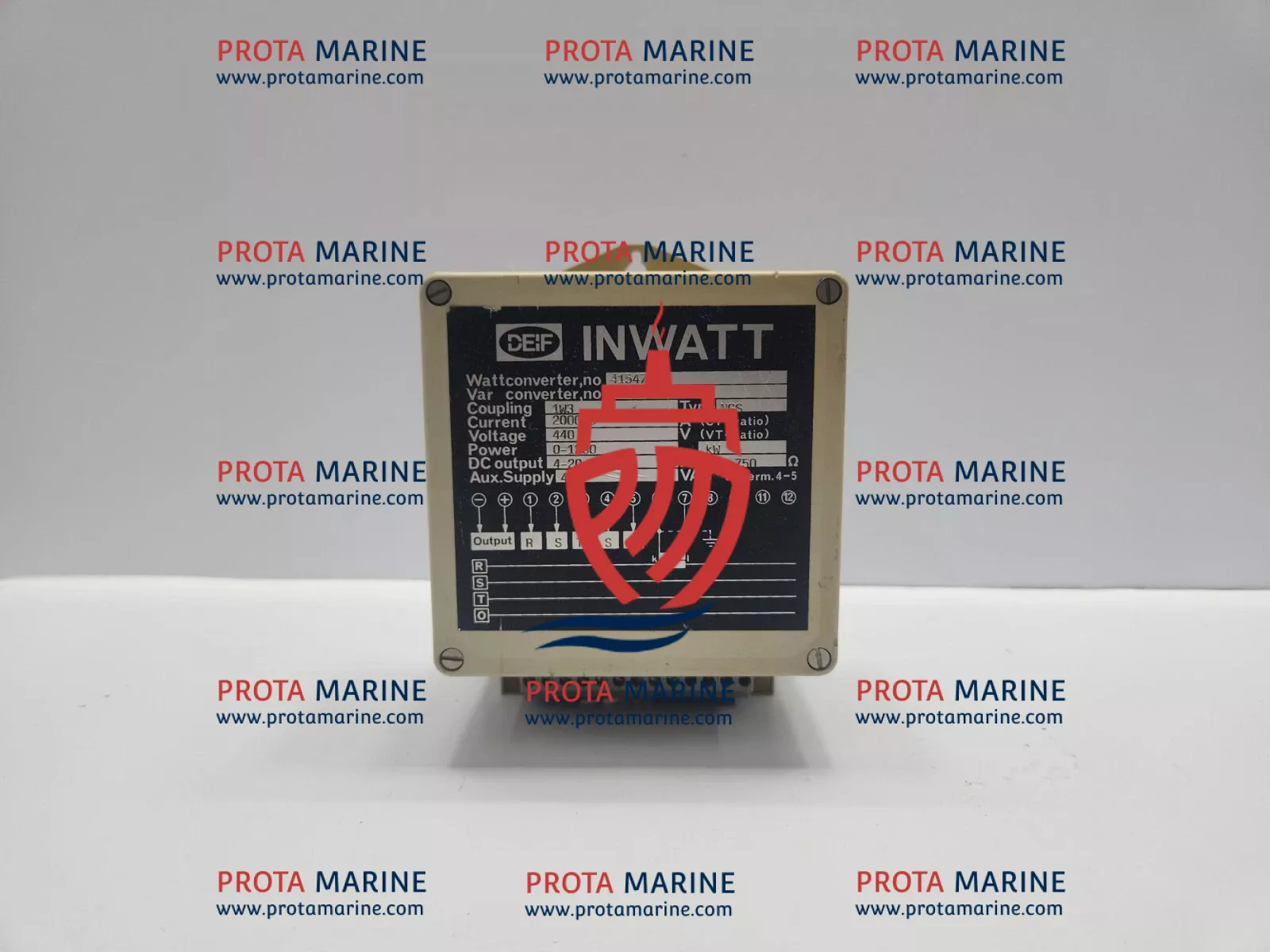
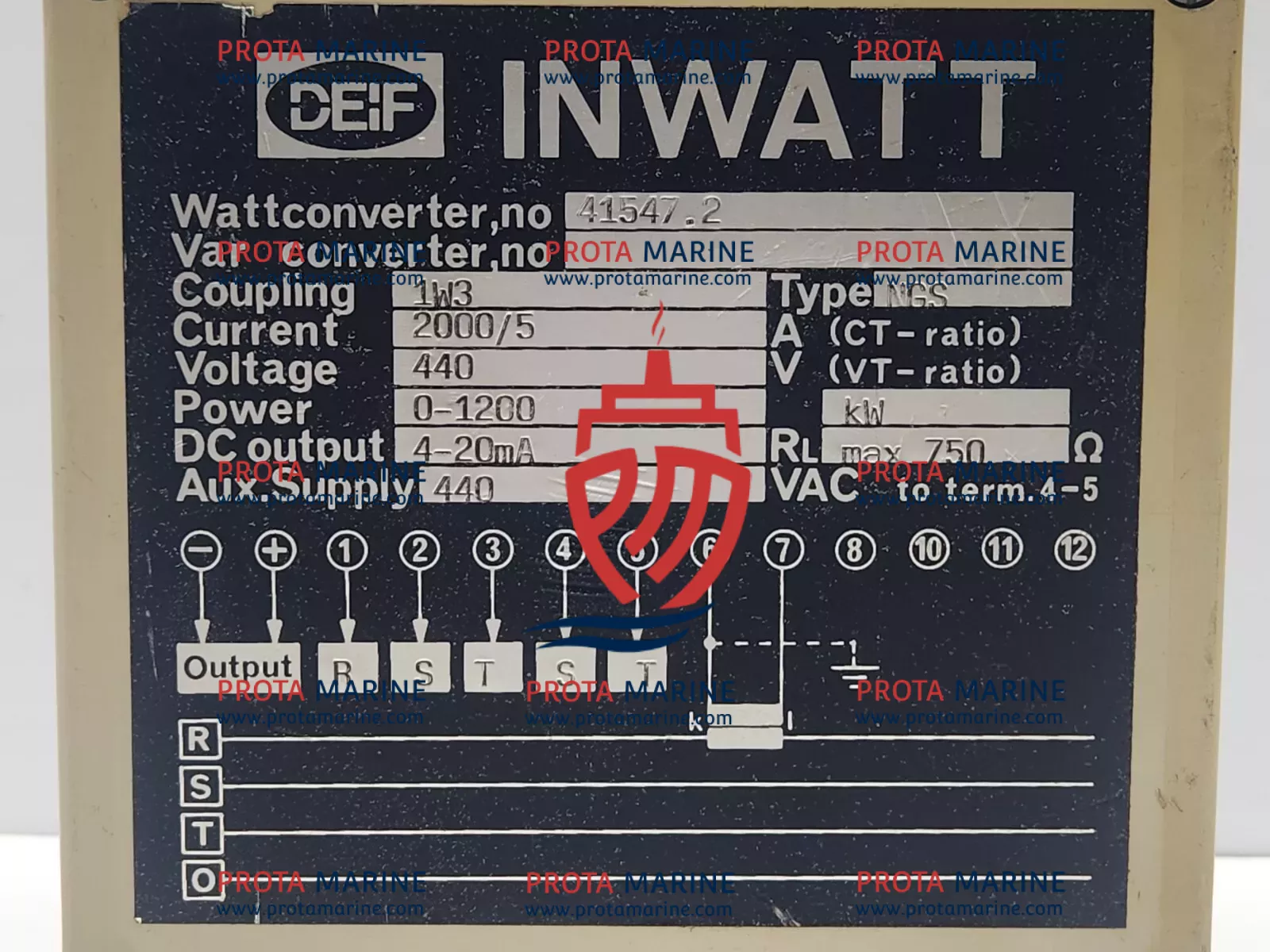
DEIF
TYPE: NGS
INWATT CONVERTER
NO: 41547.2
COUPLING: 1W3
CURRENT: 2000/5 A (CT-RATIO)
VOLTAGE: 440 V
POWER: 0-1200 KW
DC OUTPUT: 4-20MA
RL: MAX 750 Ω
AUX.SUPPLY: 440 VAC TO TERM. 4-5
The DEIF NGS Inwatt Converter (No. 41547.2) is a precision active power transducer designed for marine electrical distribution and control system applications. It measures real electrical power from a three-phase supply and converts that measurement into a standardised 4–20mA DC analogue output signal, enabling seamless integration with ship automation, power management, and generator control panels. Rated for a 440V system with a CT ratio of 2000/5A and a power measurement range of 0–1200kW, this transducer provides accurate, continuous power feedback critical to safe and efficient vessel power management. As a core component within the Marine Control System category, it supports load sharing, overload protection, and power monitoring functions aboard commercial and offshore vessels.
Key Features
✓ Converts three-phase active power to a 4–20mA DC analogue output signal, compatible with a maximum load resistance of 750Ω, for direct integration into PLCs, power management systems, and automation controllers.
✓ Rated for 440V AC systems with a CT ratio of 2000/5A and a continuous power measurement range of 0 to 1200kW, as specified in the original product data.
✓ Operates with a 1W3 coupling configuration and requires an auxiliary supply of 440VAC connected to terminals 4–5, making installation parameters clearly defined for qualified marine electricians.
✓ Designed for integration within DEIF generator control and power management panel architectures; compatibility with specific panels or controllers beyond the DEIF NGS platform should be confirmed against system drawings and configuration.
✓ Suitable for installation within switchboard or control panel enclosures in the engine room or power management room; service replacement should reference the original nameplate data and system wiring diagrams to ensure correct configuration.
Marine Applications
✓ Generator load monitoring and active power measurement aboard merchant vessels, tankers, bulk carriers, and container ships.
✓ Integration with shipboard power management systems (PMS) for automatic load sharing and load shedding control across multiple generator sets.
✓ Engine room switchboard panels where real-time power metering and analogue signal output are required for centralised monitoring displays or SCADA systems.
✓ Offshore support vessels, platform supply vessels (PSVs), and drilling rigs where precise electrical power data is essential to dynamic positioning and power distribution management.
✓ Retrofit and upgrade projects where an existing power transducer within a DEIF-based control system requires like-for-like replacement to restore accurate power measurement capability.
Why Marine Engineers Choose
The DEIF NGS Inwatt Converter is a well-established transducer in marine power management installations, valued for its clearly defined electrical interface, standardised analogue output, and compatibility with DEIF control architectures. Its straightforward 4–20mA signal output simplifies integration with a wide range of shipboard monitoring and automation equipment, reducing commissioning complexity during both new installation and replacement scenarios.
Ideal For
Merchant vessels, tankers, bulk carriers, container ships, offshore support vessels, PSVs, drilling units, ferries, and any commercial or industrial vessel operating DEIF-based power management or generator control systems requiring active power measurement and analogue signal output.
Technical Support & Compliance
Technical assistance is available to support remote troubleshooting, onboard diagnostics, commissioning, and system integration for this DEIF NGS Inwatt Converter. Support covers wiring verification, signal calibration guidance, retrofit planning, and compatibility assessment with existing DEIF panel configurations — all subject to confirmation against the specific installation. To confirm suitability for your application, buyers are encouraged to share the original nameplate photographs, existing wiring diagrams or panel drawings, the system model and software version where applicable, vessel name and IMO number, and a clear description of the intended scope of installation or replacement. Compliance with applicable classification society requirements and shipboard electrical standards should be verified by the vessel’s authorised engineers or electrical officers prior to installation.