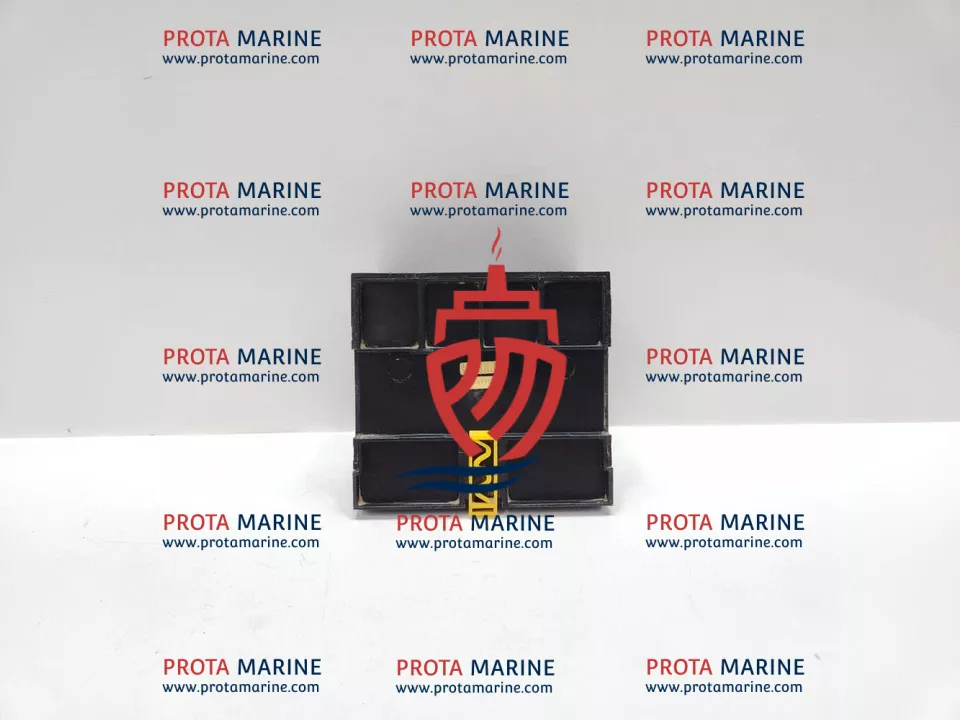

Description
DEIF
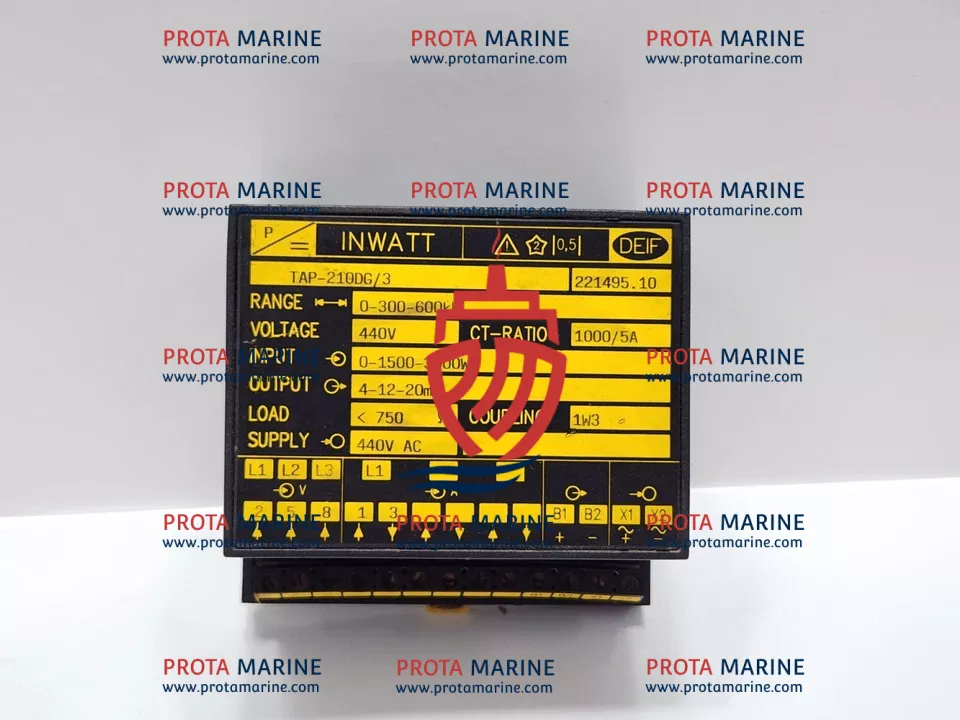
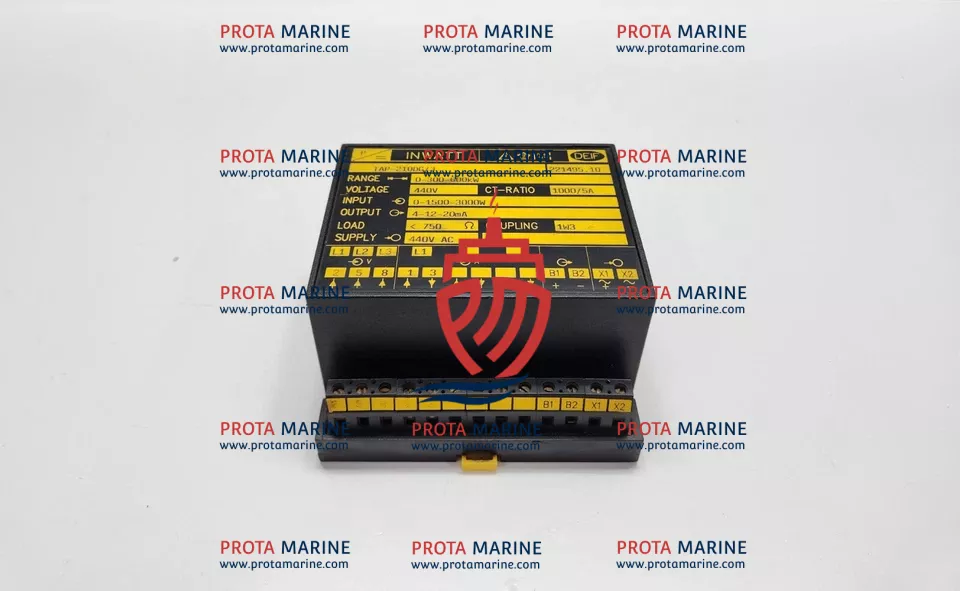
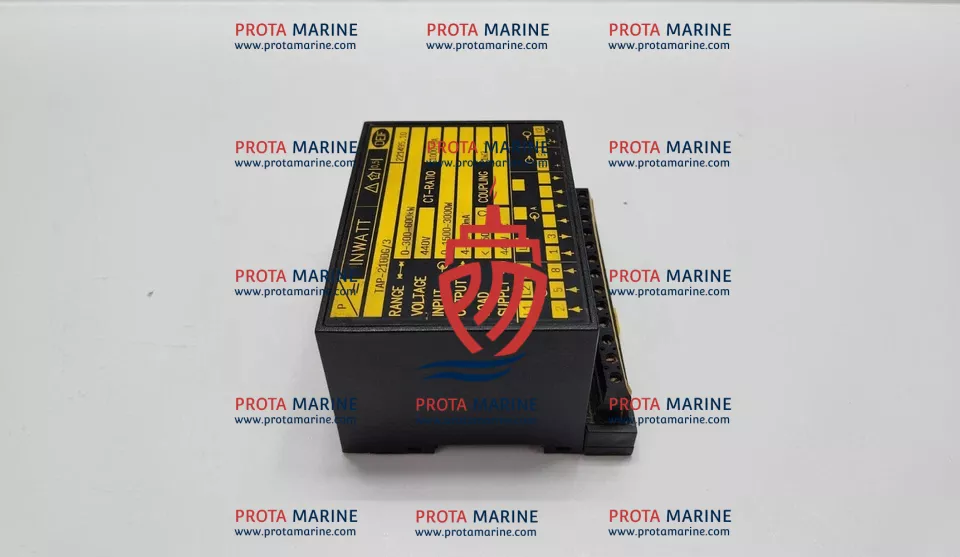
TAP-210DG/3
IN WATT TRANSDUCER
221495.10
RANGE: 0-300-600 KW
VOLTAGE: 440V CT-RATIO: 1000/5A
INPUT: 1-1500-3000W
OUTPUT: 4-12-20MA
LOAD: <750U COUPLING: 1W3
SUPPLY: 440V AC
The DEIF TAP-210DG/3 is a three-phase active power (watt) transducer designed to provide accurate, continuous measurement of real power in shipboard electrical systems. It converts three-phase power inputs into a standardised analogue current signal, enabling precise monitoring and control within marine power management and generator control architectures. As a core component within a Marine Control System, it plays a critical role in load sharing, power limitation, and generator protection — functions directly tied to the safe and efficient operation of the vessel’s main switchboard and power plant.
Key Features
✓ Measures three-phase active power across a dual range of 0–300 KW and 0–600 KW, with a corresponding output signal of 4–12–20 mA, making it compatible with standard analogue input cards used in marine control and monitoring systems.
✓ Rated for a 440V AC supply voltage with a CT ratio of 1000/5A and an input range of 1–1500–3000W; load impedance is specified at less than 750Ω, with a 1W3 coupling configuration as stated in the original product data.
✓ Designed for integration with DEIF power management and generator control panels, including systems where analogue transducer signals feed directly into controllers managing load distribution and protection relays — subject to confirmation against the specific panel or controller version.
✓ Suitable for installation within main switchboard cubicles or generator control panels in the engine room; mounting and environmental suitability should be confirmed against the vessel’s panel arrangement and ambient conditions prior to installation.
✓ As a direct replacement or retrofit transducer, compatibility with existing wiring, CT secondary circuits, and analogue input scaling should be verified using the vessel’s wiring diagrams and the existing transducer nameplate data before installation.
Marine Applications
✓ Shipboard main switchboard power monitoring on merchant vessels, offshore support vessels, and platform supply vessels where generator load is continuously tracked and managed.
✓ Generator control panels requiring real-time active power feedback for automatic load sharing and load shedding protection across parallel-running generators.
✓ Power management systems on ferries, RoPax vessels, and cruise ships where precise watt measurement supports efficient distribution across multiple bus sections.
✓ Offshore drilling units and FPSOs where generator sets operate under variable and high-demand loads, requiring accurate transducer signals for power limitation and blackout prevention.
✓ Naval auxiliaries and specialist workboats utilising DEIF-based control architectures where the analogue output feeds into SCADA, alarm monitoring, or integrated bridge systems.
Why Marine Engineers Choose
The DEIF TAP-210DG/3 is a trusted transducer within DEIF power management ecosystems, valued for its straightforward analogue interface, defined dual measurement range, and compatibility with standard marine switchboard CT installations — reducing commissioning complexity and supporting reliable long-term operation in demanding engine room environments.
Ideal For
Merchant cargo vessels, tankers, offshore support vessels, FPSOs, ferries, cruise ships, naval auxiliaries, and any vessel class operating DEIF generator control or power management systems requiring active power transducer replacement or upgrade.
Technical Support & Compliance
Remote technical assistance is available to support fault diagnosis, signal verification, and integration queries prior to or following installation. Onboard commissioning guidance, analogue loop testing, and retrofit support can be coordinated depending on vessel location and scope. To confirm compatibility and suitability — subject to confirmation — buyers are advised to share the original transducer nameplate photograph, part number 221495.10, relevant panel or controller model and software version, CT secondary wiring details, existing analogue input card specifications, and vessel name or IMO number where applicable. Providing electrical drawings or the switchboard single-line diagram will further assist in confirming correct selection and wiring configuration.